
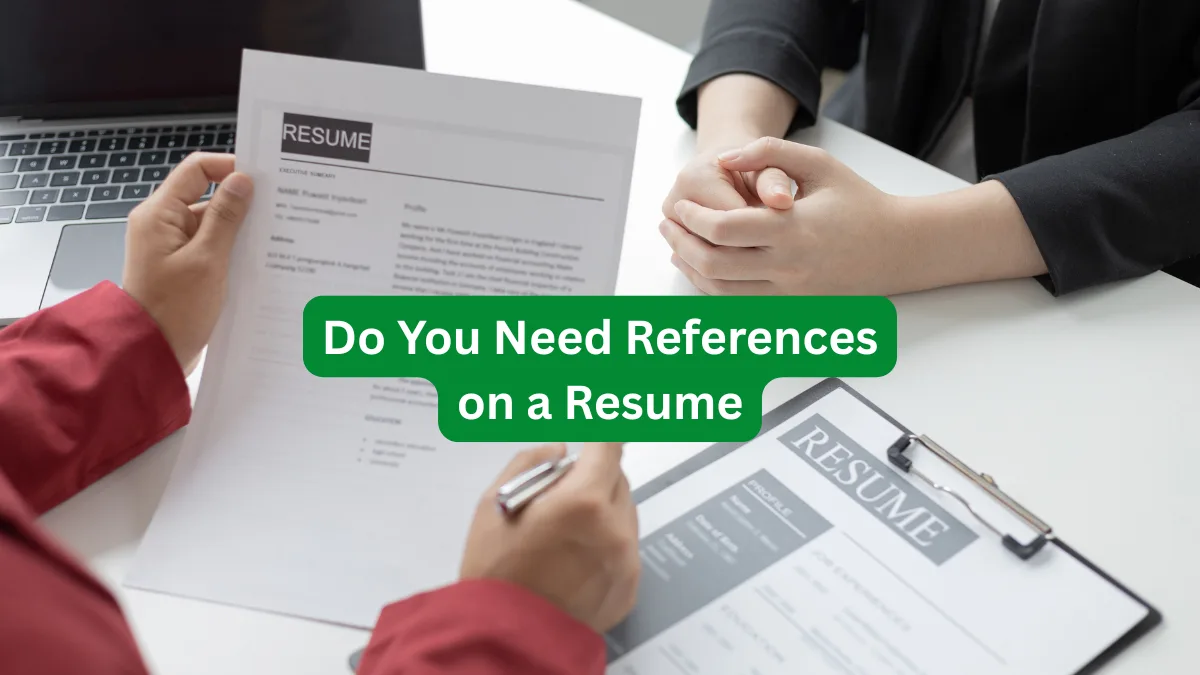
Most job seekers ask at some point: do you need references on a resume? It is a fair question, and the answer has changed over the years. What was standard practice two decades ago is now considered outdated by most hiring managers and career professionals. Getting this wrong can quietly hurt your application before you even get a call.
References matter in hiring. But where they appear, when you share them, and how you handle them tells a recruiter a lot about how current your job search knowledge is. This article covers the modern standard, what to do instead, and how to handle every reference-related situation you are likely to face.
Also Read: How to List Volunteer Experience on Resume
No, you do not need references on a resume. Modern hiring practice treats references as a separate document shared only when the employer asks. Adding “References available upon request” is also unnecessary. Keep your resume space for skills, experience, and accomplishments instead.
Do You Need References on a Resume?
The short answer is no. You do not need references on a resume, and most career experts and recruiters agree on this point. The Society for Human Resource Management (SHRM) and major career platforms including LinkedIn, Indeed, and the Harvard Career Center all recommend keeping references off your resume entirely.
Here is why:
- Employers expect to ask for references separately, after the interview stage
- Adding references on a resume takes up space that is better used for experience and achievements
- Sharing reference contact details before they are requested can put your references in an awkward position
- Listing “References available upon request” tells recruiters nothing they do not already know
The phrase “References available upon request” was common practice decades ago. Today, hiring managers view it as filler. It occupies a full line or more on your resume without adding any value to your application.
When Did “References on a Resume” Become Outdated?
The shift away from listing references directly on a resume happened gradually from the 1990s onward as hiring became more formalized. By the time digital applications and ATS systems became standard in the 2010s, resume real estate became even more valuable. Every line counts. A reference list takes space that would be better used for a quantified achievement or a relevant skill.
Most hiring managers today assume you have references. The question is not whether you have them. It is whether your references are strong and prepared. That preparation happens separately from the resume itself.
What to Do Instead of Listing References on a Resume
Since you do not need references on a resume, here is what to do with that space and how to handle references properly:
- Prepare a separate reference sheet. Create a clean, one-page document with three to five professional references. Include their name, job title, company, phone number, email address, and your relationship to them.
- Match the formatting to your resume. Use the same font, header, and style as your resume. It looks polished when both documents come from the same set.
- Bring it to interviews. Print two or three copies of your reference sheet to leave with the interview panel if they ask.
- Upload it when explicitly requested. Some online applications include a field for references. In those cases, enter the information directly into the form.
- Notify your references in advance. Tell them the job title, company name, and what skills or projects you want them to speak to. A prepared reference gives a much stronger endorsement.
- Use that resume space for an achievement instead. One strong, quantified bullet point does more for your application than any reference list.
How Many References Should I Have on My Resume (and on Your Reference Sheet)?
Since references belong on a separate sheet rather than your resume, the real question becomes: how many references should you have ready?
| Career Stage | Recommended Number | Notes |
|---|---|---|
| Entry-level or new graduate | 3 references | Include professors, internship supervisors, or part-time employers |
| Mid-career professional | 3 to 4 references | Focus on direct managers and senior colleagues |
| Senior or executive level | 4 to 5 references | Include board members, executives, or major clients where appropriate |
| Career changer | 3 to 4 references | Mix of former managers and people who can speak to transferable skills |
| Academic or research roles | 4 to 5 references | Professors, thesis advisors, or published collaborators often expected |
Three strong references beat five weak or unprepared ones every time. Quality matters more than quantity.
Who Should Be on Your Reference List?
Choosing the right references is more important than the number. Here are the best and least effective options:
Strong reference choices:
- Direct managers who supervised your day-to-day work
- Senior colleagues who worked closely with you on major projects
- Clients or stakeholders who saw your work from the outside
- Professors or academic advisors (for early-career candidates)
- Mentors with recognized standing in your industry
Avoid these:
- Friends or family members, even if they are professionals
- Former colleagues who have not worked with you in more than 10 years, unless the role is directly relevant
- Anyone you left on bad terms with, even if you think it has been resolved
- People who do not know your work in any professional capacity
- Former managers who left your company under negative circumstances
Always ask permission before listing someone as a reference. A reference who is caught off guard gives a weaker answer and may not speak to the right skills.
Also Check: What is a Headline on a Resume? How to Write One That Gets Noticed
What Does a Professional Reference Sheet Look Like?
A reference sheet is straightforward. Here is the format to follow:
Reference Sheet Header Use the same name, contact information, and styling as your resume header.
Each Reference Entry Should Include:
- Full name
- Current job title
- Company name
- Professional relationship to you (e.g., “Direct Manager at Company X, 2019 to 2022”)
- Phone number
- Email address
Example Entry:
Sarah Okonkwo Head of Marketing, Bright Digital Agency Direct Manager (2020 to 2023) sarah.okonkwo@brightdigital.com | (512) 555-0183
Keep the sheet to one page. Use clean spacing and no graphics or decorative elements. The goal is clarity, not design.
Do You Need References on a Resume for Every Type of Job?
The standard holds across most industries: you do not need references on a resume for the majority of roles. However, there are a few situations where the expectations differ slightly.
| Job Type | Reference Expectation |
|---|---|
| Corporate / private sector | Separate reference sheet, provided on request |
| Government / federal jobs | References often required in the application itself |
| Academic / faculty positions | Extended reference letters required at application stage |
| Healthcare / clinical roles | Credentialing processes often include references upfront |
| Nonprofit sector | References sometimes requested earlier in the process |
| Executive search / headhunters | References often verified at final stages, not upfront |
For government and academic applications in particular, check the specific instructions. Those fields sometimes do require references at the point of application. But for most private-sector roles, keep references off your resume.
The “References Available Upon Request” Line: Drop It
This line still appears on resumes, and it should not. Here is why it hurts more than it helps:
- It takes up space without saying anything meaningful
- Every recruiter already assumes you have references
- It signals that your resume may be following outdated conventions
- It can push more important content off the first page
If your resume is tight on space and you are deciding what to cut, this line goes first. No recruiter has ever rejected a strong candidate for leaving it out.
How to Handle References During the Hiring Process
Knowing you do not need references on a resume is one part of the picture. Knowing how to manage them through the whole hiring process is the other part.
Step 1: Build your list early. Before you start applying, identify three to five people willing to serve as references. Ask them directly and confirm they are comfortable speaking positively about your work.
Step 2: Brief your references per application. For each role, send your references the job description and a few bullet points about what you hope they will emphasize. This takes five minutes and makes a significant difference in how they respond.
Step 3: Share your reference sheet only when asked. Do not attach your reference sheet to an application unless the job posting specifically requests it. Bring it to interviews and offer it when the interviewer asks.
Step 4: Follow up with your references after each use. Let them know how the process is going. Thank them after they are contacted. This keeps the relationship strong and shows respect for their time.
Step 5: Keep your list current. If a reference changes jobs, email addresses, or becomes unreachable, update your sheet. An outdated reference contact reflects poorly on your attention to detail.
Do You Need References on a Resume When Applying Online?
For most online applications, no. You do not need references on a resume submitted through an ATS or job board. Online applications typically have a separate section for reference information if the employer wants it at the application stage.
Attaching a reference list when it was not requested can actually create confusion in ATS systems. Some systems parse all uploaded documents and may pull reference names into fields meant for your own work history. Keep your resume file clean and reference-free unless the posting specifically says otherwise.
Red Flags That Signal a Bad Reference
Even a willing reference can hurt your application. Watch for these warning signs:
- They seem uncertain about specific projects or dates when you brief them
- They have not been in contact with you for several years
- They left their company under difficult circumstances and seem stressed about being contacted
- They give vague answers when you ask what they would say about your work
- They suggest a different reference might be better
If you pick up on any of these signals, remove them from your active list. A lukewarm reference does more damage than having one fewer contact on your sheet.
Frequently Asked Questions
Is it ever okay to put references directly on a resume?
In most cases, no. The only exceptions are certain government or academic applications that specifically request references at the point of submission. For every other job type, keep references on a separate sheet and provide it only when asked.
How many references should I have on my resume reference sheet?
Aim for three to four professional references for most roles. Senior or executive candidates may have five. All references should know your work directly and agree in advance to speak on your behalf. More than five is rarely necessary.
Can I use a coworker as a reference instead of a manager?
Yes, a senior colleague or peer who worked closely with you is a valid reference. They are most useful when they can speak to specific skills or projects. Pair them with at least one direct manager reference for balance, as employers often prefer manager perspectives.
What if I do not have any professional references?
Start with what you have: professors, internship supervisors, volunteer coordinators, or clients. If you are early in your career, academic and community references are acceptable. As you build work history, replace them with professional contacts from your paid roles.
Should I list my references’ LinkedIn profiles on my reference sheet?
It is not required but it can be helpful. A LinkedIn URL lets a hiring manager quickly verify a reference’s current title and company. Include it only if the reference’s LinkedIn profile is up to date and reflects their professional standing accurately.
How long should I keep the same references?
Update your reference list every two to three years or whenever your career significantly changes. A reference who knew you as a junior employee five years ago may not be the best person to speak to your current senior-level capabilities. Stay in contact with strong references regularly.
Conclusion
Do you need references on a resume? No. Keep them off your resume, drop the “available upon request” line, and prepare a clean, separate reference sheet you can hand over when asked. That is the modern standard, and following it signals that you know how hiring actually works.
Spend the space on your resume doing what a resume is meant to do: showing your experience, skills, and results. Your references do their job later in the process, when the employer is already interested.




Leave a Comment