
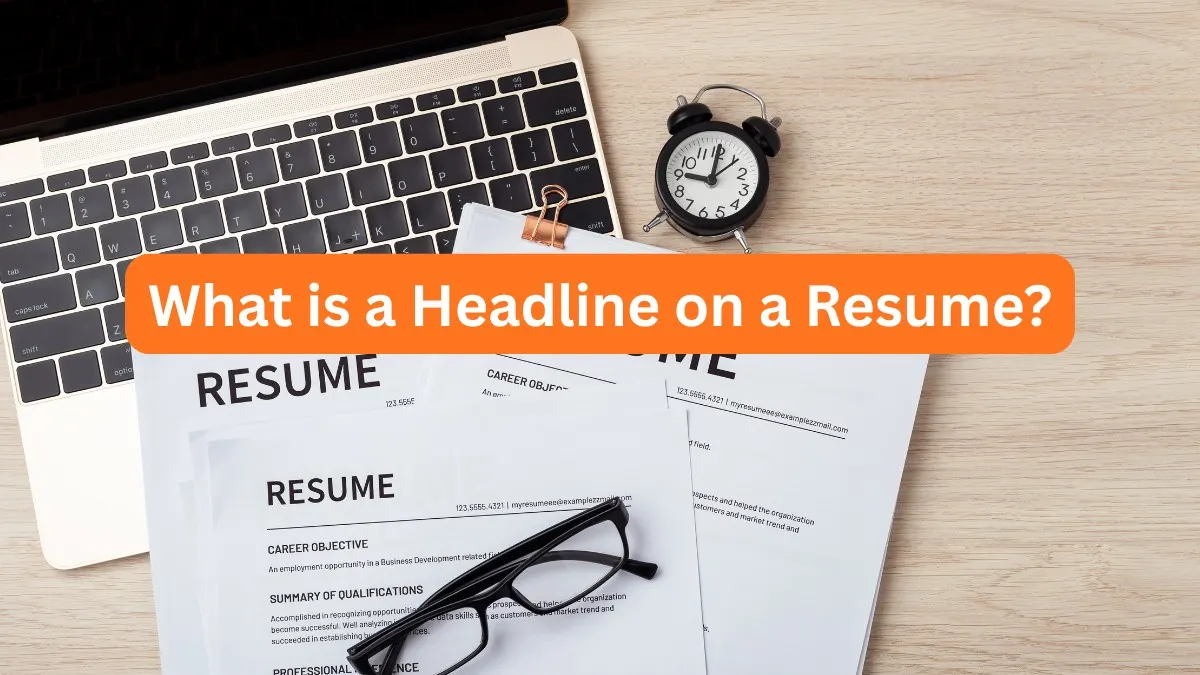
Many job seekers often ask, “What Is a Headline on a Resume?” A resume headline is a short and powerful statement placed at the top of your resume that highlights your skills, experience, qualifications, or professional strengths. A strong resume headline can quickly capture a recruiter’s attention and help your job application stand out from hundreds of resumes.
Understanding What Is a Headline on a Resume? is important because recruiters usually spend only a few seconds scanning each resume. A clear and professional headline helps employers instantly understand your profile and career value. It also improves the overall appearance of your resume and increases the chances of getting shortlisted for interviews.
In this guide, you will learn What Is a Headline on a Resume?, why it matters, how to write an effective headline, and examples for different industries and job roles. This article will help you create a resume headline that looks professional and gets noticed by hiring managers.
Must Read: How to List Volunteer Experience on Resume
A headline on a resume is a short phrase, usually one to two lines, placed below your name and contact information. It states your job title, key skill, or value you bring to an employer. It works like a newspaper headline: it grabs attention fast and tells the reader exactly who you are.
What is a Headline on a Resume?
A headline on a resume is a brief, targeted phrase at the top of your resume that tells a hiring manager who you are and what you do. Most headlines run between five and ten words. They sit directly below your contact information and above your resume summary or work experience section.
Think of it as your professional label. A hiring manager spends about seven seconds scanning a resume before deciding to read further. A strong headline makes those seconds count.
Headlines differ from resume objectives (which focus on what you want) and resume summaries (which are longer and explain your background). The headline is punchy. It speaks first.
Why a Resume Headline Matters
Recruiters and hiring managers read dozens, sometimes hundreds, of resumes for a single role. A headline on a resume does three things quickly:
- It identifies your professional identity.
- It signals the role you are targeting.
- It highlights your strongest qualifier, whether that is your job title, years of experience, or a top skill.
Applicant tracking systems (ATS) also scan resume headlines. If your headline includes the job title or key terms from the job posting, your resume scores higher in ATS filters.
Resume Headline vs. Resume Summary vs. Resume Objective
Many job seekers confuse these three sections. Here is how they differ:
| Section | Length | Focus | When to Use |
|---|---|---|---|
| Resume Headline | 5 to 10 words | Your title or top qualifier | Always, at the top |
| Resume Summary | 3 to 5 sentences | Your background and key achievements | Mid-career and senior professionals |
| Resume Objective | 2 to 3 sentences | Your career goal | Career changers, entry-level candidates |
A headline on a resume works with your summary, not as a replacement. Use both when possible.
Where to Place a Resume Headline
Place your headline:
- Directly below your name and contact information
- Above your resume summary or professional profile
- In a larger or bold font to make it stand out
Example layout:
John Rivera john.rivera@email.com | LinkedIn | (555) 123-4567
Senior Financial Analyst | 8 Years | FP&A & Forecasting
Financial analyst with 8 years of experience in financial planning…
The headline on a resume acts as a visual anchor. It tells the reader what frame to use when reading everything below it.
How to Write a Strong Resume Headline
Follow these steps to write a headline that works:
- Start with your job title. Use the exact title from the job posting when it matches your background. This helps with ATS and with the recruiter’s first impression.
- Add years of experience (if relevant). “5+ Years” or “10-Year” signals seniority without wasting space.
- Include one strong qualifier. Pick a top skill, certification, industry, or result. Keep it specific.
- Keep it to one line. Two lines are acceptable for senior roles. Three lines is too much.
- Skip personal pronouns. Do not write “I am a…” Just state the title and qualifier.
Formula:
[Job Title] | [Years of Experience] | [Top Skill or Qualifier]
Resume Headline Examples by Industry
Below are headline examples that show the formula in action across different fields.
Technology
- Software Engineer | 6 Years | Full-Stack React & Node.js
- Data Scientist | Machine Learning & Python | Healthcare Industry
Marketing
- Digital Marketing Manager | SEO & Paid Media | B2B SaaS
- Content Strategist | Brand Voice & Editorial Planning | 4 Years
Finance
- CPA | Corporate Tax & Compliance | Big 4 Background
- Financial Analyst | FP&A, Budgeting & Forecasting | Manufacturing
Healthcare
- Registered Nurse | ICU & Critical Care | 7 Years
- Healthcare Administrator | Hospital Operations & Regulatory Compliance
Human Resources
- HR Generalist | Talent Acquisition & Employee Relations | Mid-Size Companies
- Compensation Analyst | Pay Equity & Total Rewards | Tech Sector
Education
- High School Science Teacher | STEM Curriculum | 10 Years
- Instructional Designer | eLearning & LMS Development | Corporate Training
Sales
- B2B Sales Executive | SaaS | Consistent 120%+ Quota Attainment
- Account Manager | Retail Partnerships & Revenue Growth | CPG Industry
Operations
- Supply Chain Manager | Logistics & Procurement | Global Manufacturing
- Project Manager | PMP Certified | IT Infrastructure & Agile Delivery
These examples all follow the same structure: title, qualifier, context. Notice none of them use vague words like “results-driven” or “dynamic.” Concrete language works better every time.
Common Mistakes to Avoid
Many candidates understand what a headline on a resume is but still write one that hurts rather than helps. Avoid these errors:
- Using buzzwords. Phrases like “results-oriented professional” or “passionate team player” add no real information. Cut them.
- Being too generic. “Marketing Professional” is too broad. “Email Marketing Specialist | Klaviyo & Mailchimp | eCommerce” is far stronger.
- Writing a full sentence. A headline is a label, not a sentence. Drop the verb.
- Mismatching the job. If the posting says “Product Manager” and your headline says “Program Coordinator,” ATS and recruiters will move on.
- Making it too long. If it wraps to three lines, trim it. Short and specific beats long and vague.
- Skipping it entirely. Leaving your name at the top with no headline wastes valuable screen real estate and forces the recruiter to search for context.
Resume Headline for Different Career Stages
The right approach to a headline on a resume changes based on where you are in your career.
Entry-Level Candidates Focus on your degree, relevant coursework, or a technical skill. Do not apologize for having less experience. Highlight what you bring.
Recent Marketing Graduate | Social Media & Content Creation | Google Analytics Certified
Mid-Career Professionals Emphasize your title, years of experience, and a key area of expertise.
Operations Manager | 7 Years | Lean Six Sigma & Process Improvement
Career Changers Highlight transferable skills and your new target role. Be direct about the pivot.
Former Teacher Transitioning to Corporate Training | Curriculum Design & Facilitation
Executive and Senior Leaders Focus on scope, impact, and industry.
Chief Operating Officer | Global Operations | $500M+ P&L Responsibility
How ATS Reads Your Resume Headline
Applicant tracking systems parse your resume before any human sees it. The headline on a resume is one of the first sections ATS reads.
To pass ATS filters:
- Use plain text formatting. Avoid text boxes, graphics, or unusual fonts in the headline section.
- Mirror the exact job title from the posting when possible.
- Include industry-specific keywords relevant to the role.
- Avoid abbreviations the ATS may not recognize unless the full term appears elsewhere.
A headline that fails ATS screening means your resume never reaches a recruiter, no matter how strong the rest of your document is.
Frequently Asked Questions
Is a headline on a resume required?
No, it is not required. But it is strongly recommended. A headline on a resume gives the recruiter an instant read on who you are. Without it, they have to scan your whole document to figure out your role. That wastes their time and your opportunity.
How long should a resume headline be?
Keep it between five and ten words. One line is ideal. Two lines work for senior roles with multiple important qualifiers. Longer than two lines loses impact and clutters the top of your resume.
Can I use the same headline for every job application?
You can, but you should not. Tailor your headline on a resume to each job posting. Match the job title and include keywords from the job description. Customizing takes two minutes and meaningfully improves your chances of passing ATS and catching recruiter attention.
Should a resume headline include my years of experience?
Yes, when it adds value. “Senior UX Designer | 9 Years | SaaS Products” is stronger than just “Senior UX Designer” for a hiring manager looking for seniority. Skip years of experience if you are entry-level or if the posting does not specify a requirement.
What is the difference between a resume headline and a resume title?
They are often used interchangeably. Some writers use “resume title” to mean just the job title (e.g., “Marketing Manager”), while “resume headline” refers to a fuller phrase that includes a qualifier or skill. Either way, a headline on a resume is the line at the top of your document that defines your professional identity.
Where exactly does the headline go on a resume?
Place it directly below your name and contact information. It should appear before your resume summary, skills section, or work history. Bold it or use a slightly larger font size so it stands out visually from the body of your resume.
Conclusion
A headline on a resume is one of the simplest additions you can make to your document, and one of the most effective. It takes your professional identity, your strongest qualifier, and your target role and puts them in one clear, readable line at the top of your resume.
Write it with a specific job title, add a relevant skill or credential, and tailor it to each application. Keep it short, drop the buzzwords, and let the concrete facts speak for you.


Leave a Comment